Growing up in Australia, gaming has always been part of our lifestyle. It might have been the pokies in the corner of your local, your first gaming console at home, or a small bet on the footy with mates. These days, it’s just as likely to be a quick game on your phone during the commute.
That’s Australia’s gaming culture in a nutshell: familiar, social, and always evolving. It’s changed with new technology, shifting regulations, and the way we now spend our time.
To understand where it’s heading, it helps to look at where it started.
The Early Days of Gaming
Long before mobile apps and esports tournaments, gaming in Australia looked very different.
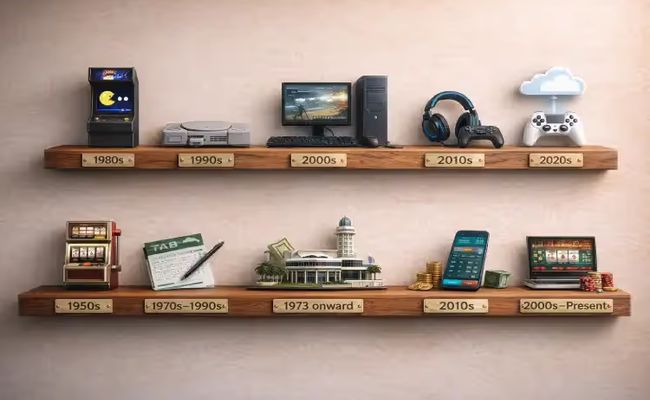
In the 1950s, Aristocrat began producing poker machines in Sydney. Those early machines evolved into the pokies that are now familiar across much of the country. Unlike many other nations, Australia placed electronic gaming machines in pubs and clubs, not just casinos. That made them part of everyday social life.
Video gaming followed its own path. In the 1980s and 1990s, local studios like Beam Software developed titles for early consoles and PCs. Arcades were common in shopping centres. Consoles slowly made their way into living rooms. Gaming wasn’t dominant yet, but it was becoming normal.
When Gambling Went Mainstream
Things shifted again in 1973 when Wrest Point opened in Tasmania as Australia’s first legal casino. Over time, casinos began appearing in capital cities, bringing tourism and hospitality into the picture.
Horse racing and sports betting were already part of Australian life. What really changed was how organised and accessible gambling became. It moved from race tracks and small betting counters into larger, licensed venues that felt more permanent and more visible.
Pokies became a big part of that story. In states like New South Wales and Queensland, machines were installed in licensed pubs and clubs, not just casinos. That made them part of everyday social spaces. Western Australia took a different path, keeping machines restricted to Crown Perth.
By the early 2000s, gambling wasn’t just something people did occasionally. It had become an integral part of venues, sport, and state revenue.
The Digital Shift
Then the internet arrived, and everything sped up.
Video gaming moved online. Multiplayer titles connected Australians with players around the world. Streaming platforms turned gamers into creators. Esports grew from small competitions into serious events with sponsorships and prize pools.
Gambling followed a similar pattern. Sports betting moved from retail counters to mobile apps. Backing your AFL or NRL team no longer required a trip to the TAB. It could be done instantly, often while watching the match live.
Online casino gaming developed differently. Under federal law, online casino products can’t be licensed locally. That means Australian-based operators can’t legally offer online pokies or table games to local players. As a result, some players access Australian online casinos, most of which operate under overseas licences.
The result is a split system: locally licensed sports betting alongside internationally licensed online casino sites.
Regulation and Public Debate
As gambling expanded across Australia, scrutiny followed. Advertising during live sport became increasingly controversial. National self-exclusion systems were introduced, major casino operators underwent regulatory reviews, and anti-money laundering rules tightened.
The focus shifted beyond expansion to questions of impact and accountability. Growth was no longer the only measure of success; consumer protection became part of the conversation. That shift has led to stronger responsible gambling safeguards in Australia, with clearer protections and support systems now expected as standard rather than optional.
Gambling remains widespread, but it operates under closer watch today than it did two decades ago
Gaming in Australia Today
Today, gaming in Australia is simply part of daily life.
More than two-thirds of Australians play video games in some form. Mobile gaming dominates casual play. Consoles and PCs still have strong communities. Australian esports players and streamers now attract global audiences.
In gambling, pokies remain a major source of spending. Sports betting stays closely tied to the sporting calendar. Mobile apps have normalised instant access.
The biggest change compared to the past? Convenience. Everything is easier to access - whether it’s a console, a livestream, or a betting app.
What Comes Next
Looking ahead, technology will continue to shape how Australians play.
Cloud gaming is reducing the need for expensive hardware. Esports ecosystems keep expanding. Digital payments are evolving. At the same time, regulation is unlikely to ease. Transparency and consumer safeguards will remain central to the discussion, particularly as governments continue refining the legal forms of gambling for Australians.
Land-based venues aren’t disappearing. They will continue to operate alongside digital platforms. The future isn’t about replacement. It’s about coexistence - with clearer rules, stronger oversight, and smarter technology shaping both sides of the industry.
Yesterday, Today, Tomorrow
Yesterday, gaming in Australia meant arcade machines and pokies in pubs. Today, it means mobile apps, livestreams, esports competitions, and betting integrated into sport. Tomorrow will likely bring smarter technology, tighter oversight, and even more digital access. What hasn’t changed is participation. Australians continue to play, compete, and engage - just in different ways.
Australia’s gaming culture has always adapted. And it will keep adapting.
You Might Also Like:

Share your thoughts in the comments
No comments yet. Be the first to comment!